WHO IS SIMON LIU?
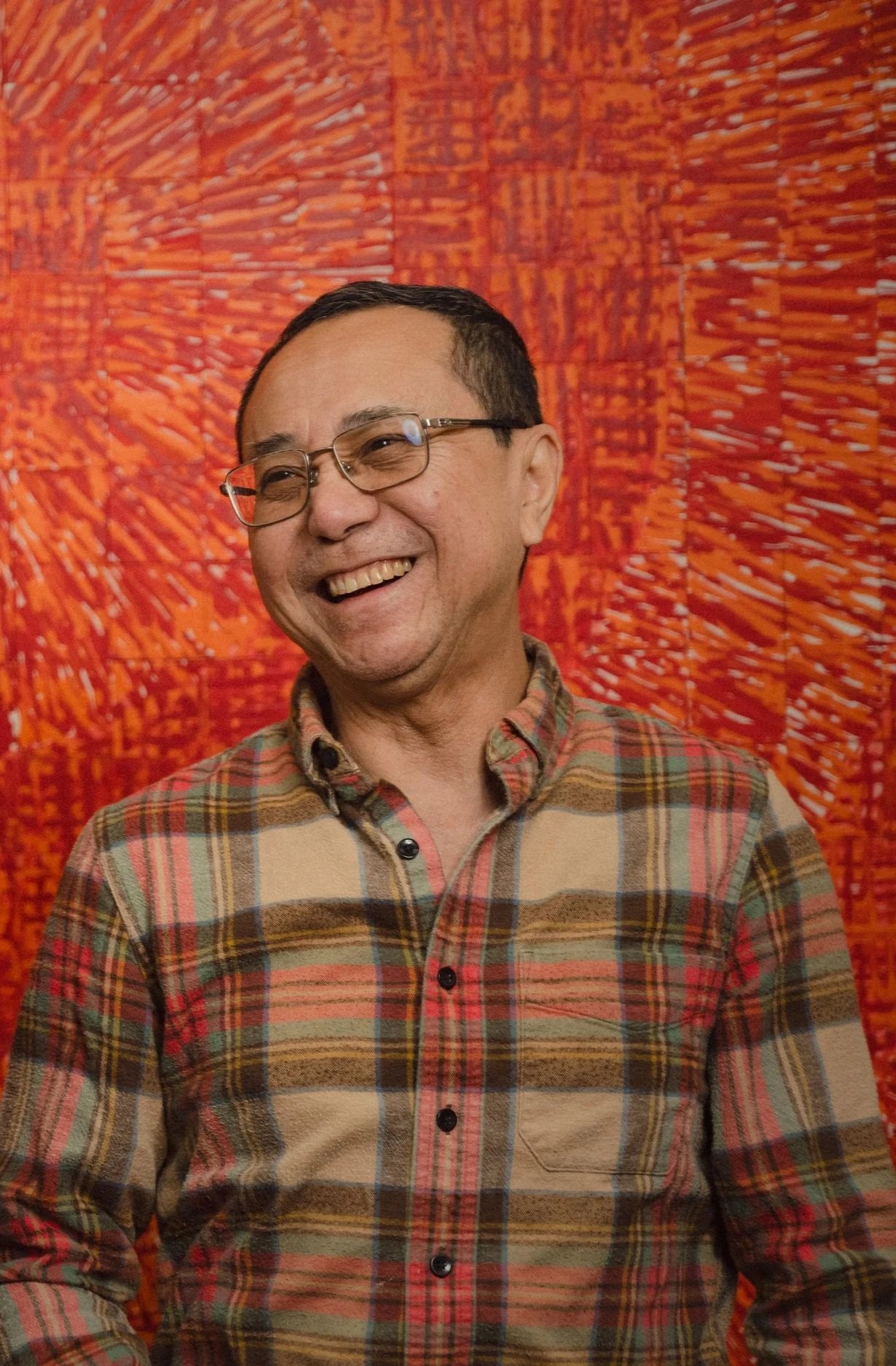
“Simon Liu? I thought he was a mythical figure.”
— German Conservator, 2018
From a top-heavy Volkswagen to personally backing billions of dollars in fine art, Simon Liu’s work has always been about building relationships.
But first we have to talk about the car
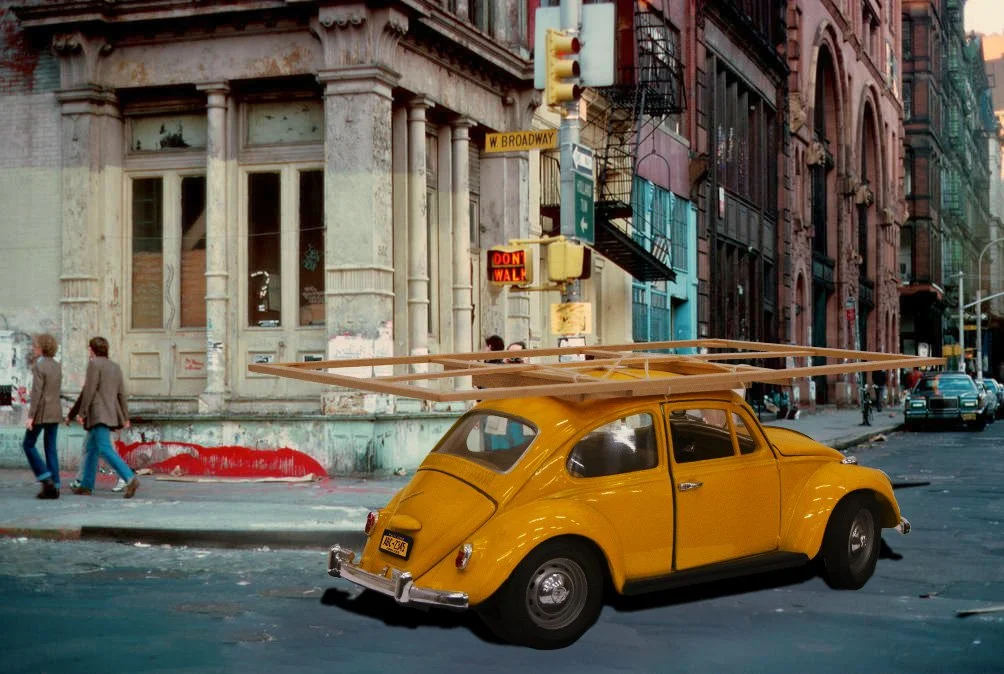
Throughout the ‘80s and early ‘90s, it was a constant — a dash of yellow darting along the drab, pothole-strewn streets of SoHo and surrounding blocks as that area dominated the art world. In fact, everywhere Simon Liu’s rusty but trusty 1974 Volkswagen Beetle ventured across the five boroughs, it was hard to miss.
His bug sported wings
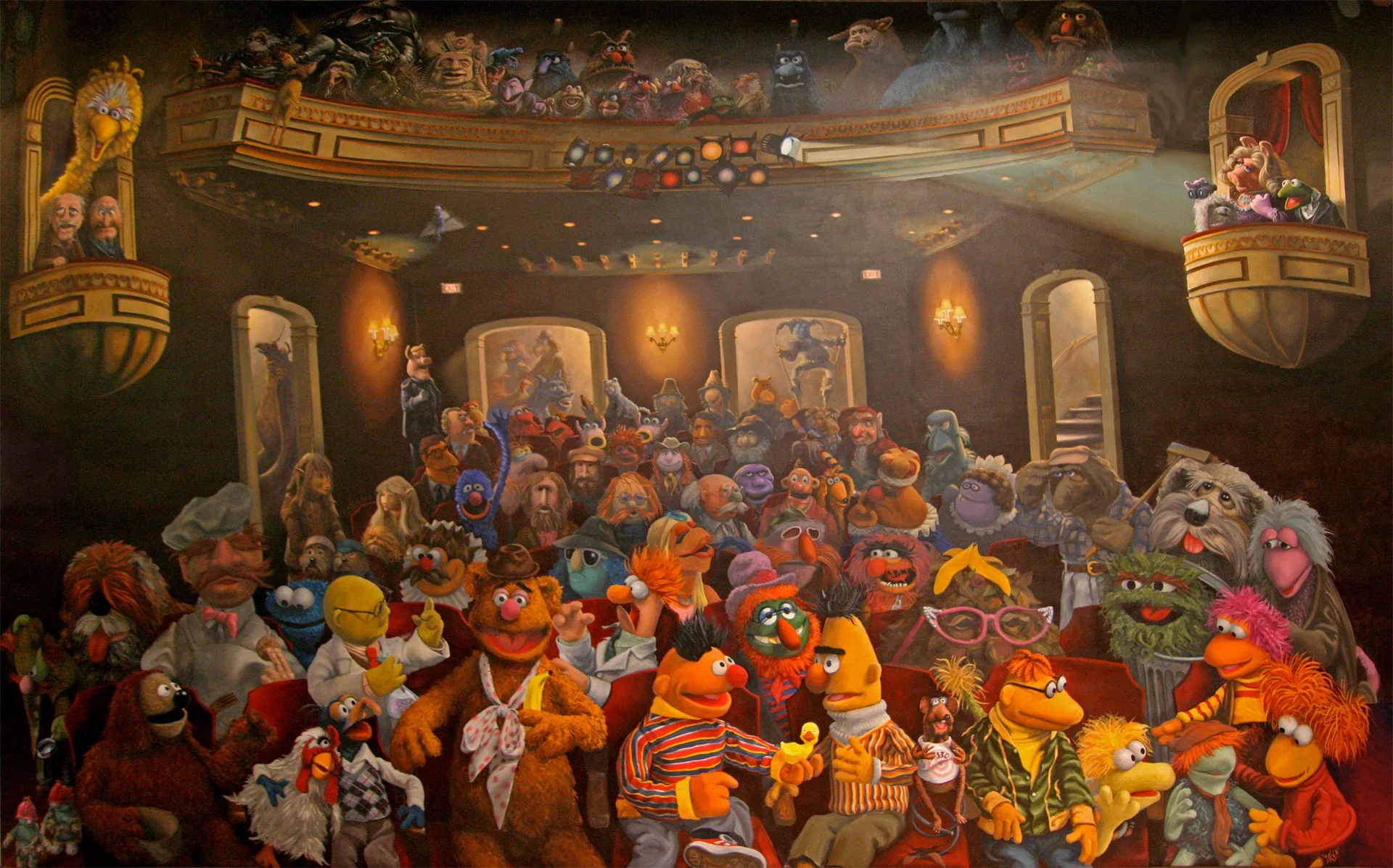
Strapped to the top with rope, comically dwarfing the car, were massive, custom-built stretchers like the one commissioned in 1984 for Coulter Watt’s joyously comprehensive painting of Jim Henson characters. That moveable mural, an early calling card for Simon’s skills, welcomed visitors to “Muppet Mansion” at 117 East 69th Street for years.
Simon’s own artistic journey began with painting. He gave up the technical drawing of a college engineering degree for more self-expressive pursuits at the University of Hartford’s Art School and, before graduating with honors and proceeding to Pratt for an MFA in painting, earned money in the summers at a large Connecticut woodworking factory.
Always good with his hands, Simon found it cheaper and more convenient to build his own stretchers. Influential abstract expressionist George McNeil was an inspiration in that regard. Like his friends Jackson Pollock and Willem de Kooning, McNeil emerged from a generation where painters routinely built their own stretchers. As Simon assisted McNeil, the venerable master, for two years after Pratt, he started honing those skills in earnest — and found that his engineering experience only fortified a preternatural drive to innovate and improve.
Art supports became Simon Liu’s art form
From there, conservators were the key professional breakthrough.
Dealing frequently with the consequences of flawed or failing supports, conservators were drawn to Simon’s singular focus on durability and longevity. An agile collaborator, he soon worked out sophisticated and ingenious new ways of adding maintenance potential to pieces, including a more precise joint system for traditional stretchers. His reputation spread slowly, and by the decade’s end he was consistently building traditional stretchers for the Metropolitan Museum of Art — followed by collaborative projects at every other major art museum in the city.
Then came the artists. Particularly for pushing creative boundaries, Simon became their semisecret weapon: a dependable ally, speaking the same language, who relished the challenge of making something unconventional or even unprecedented. All the name-brand art support companies were fairly limited in their options at the time, so Simon — eager to work closely with rising talents as well as established names — was a breath of fresh air. Conservators typically required thinner profile stretchers, suitable for 19th century and earlier pieces, while contemporary painters tended to prefer sturdier options. But in all cases, by using non-invasive practices, Simon saw prolonging the life of the artwork as the paramount aim of his craft.
Notably, Simon and his team worked on a commissioned stretcher for the United Nations “Untitled Mural For Peace” in the early 2000’s — designing, engineering, and constructing the massive 18’x29’ support. Because of its large size, the stretcher was designed to be moved in pieces before installation. A third party executed the on-site assembly, guided by a custom manual created by Simon.
Painted by Norwegian artist Per Krohg (1889-1965), the piece still hangs in the storied UN Security Council Chamber.
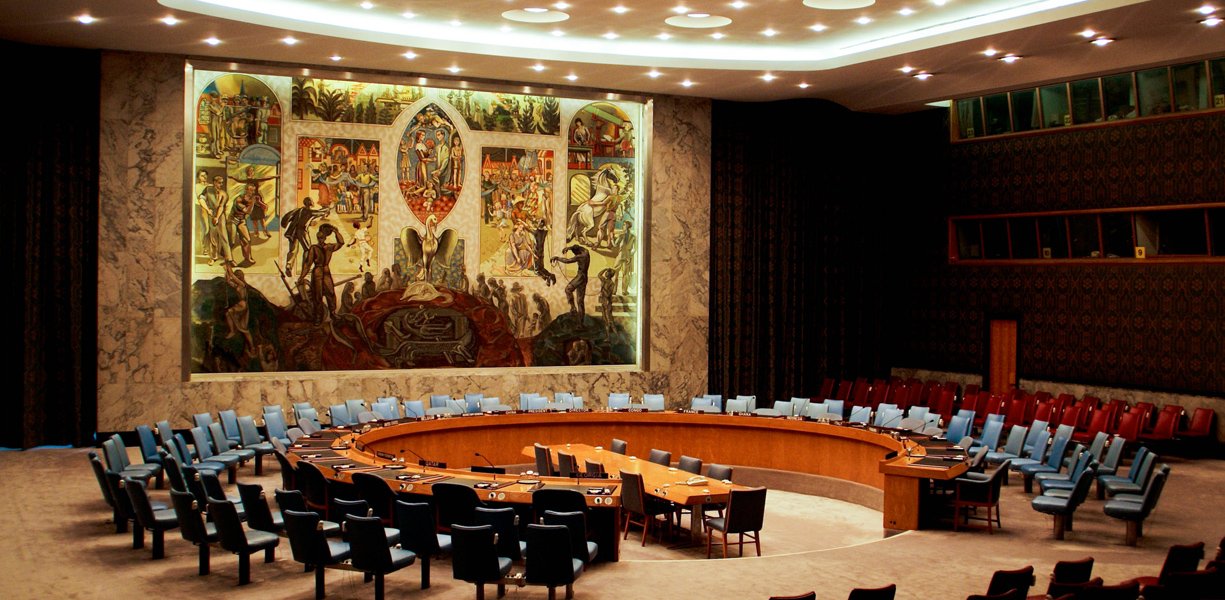
Photo by Zack Lee
Turning to the future
“Simon’s Stretchers” officially became “Simon Liu, Inc.” in 1996.
Not meant to endure, alas, was the yellow Volkswagen. Due to the growing demand for Simon’s services, the little Beetle was replaced by a series of larger vehicles, and finally a proper delivery van with a singular Simon-designed-and-constructed vaulted roof.
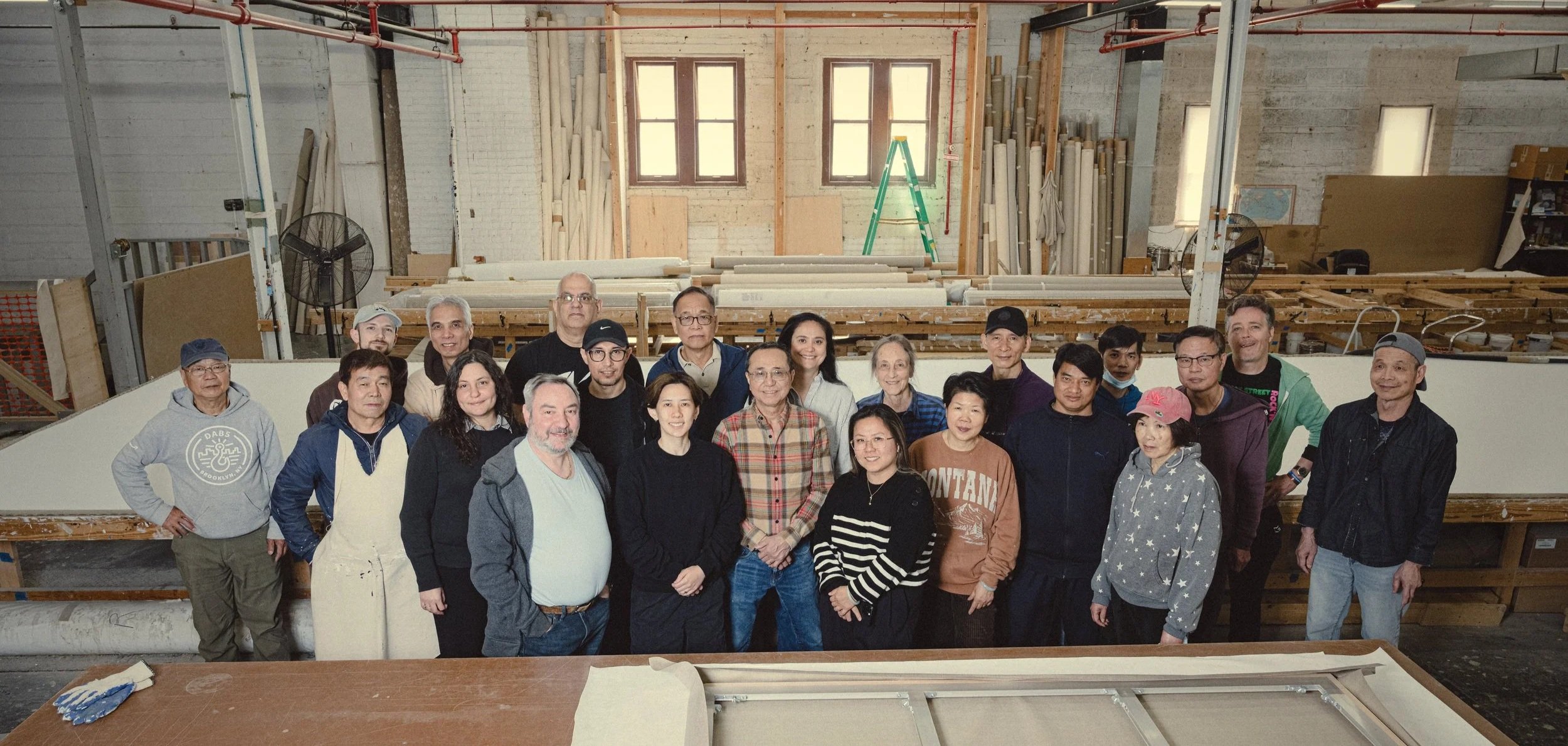
With the first purchase of a commercial property (on Dean Street in Prospect Heights), Simon was able to accommodate a staff that had grown, over successive rental locations, to fourteen. By 2006, that number had more than doubled and, to keep pace with a burgeoning international reputation atop his core congregation of New York clients, Simon settled into a 20,000 square foot Sunset Park facility.
In 2013, he relocated to nearby Greenwood Heights. Yet even as the shop’s output has grown exponentially, at its core, Simon Liu, Inc. remains a family owned, Brooklyn-based business grounded in the love of art. Simon’s inventions and innovations have been widely imitated, yet no one has ever been able to match the overall quality, service, dedication, and integrity he has brought to the field.
Far from resting on his laurels, Simon remains focused on pushing the craft forward. His product lines continue to evolve through many generations of advancements and, even now, he is still exploring new frontiers (including aluminum and advanced composite materials). Armed with the belief that everything can be improved upon, Simon takes pride in his collaborative flexibility. By finding solutions for each client’s budget, he adds value to careers at every stage.
After all, from a top-heavy Volkswagen to building over one million supports — and backing billions of dollars in fine art — Simon Liu’s work has always been about building relationships.
For all of us at Simon Liu, Inc., that pairing of integrity with a personal touch is what matters most.